

Montessori for Your 8 Year Old
Growing into a thoughtful learning partner.
Your eight year old is ready for increasingly rich and interconnected learning experiences.
This guide will help you understand what Montessori looks like at this stage and how to nurture your child's curiosity, critical thinking, and confidence.

Meet Your 8 Year Old
Eight years old. Eight incredibly insightful years old.
At eight, your child is no longer simply asking questions about the world.
They want to be the leader.
A passing interest can quickly become a stack of library books, a hand drawn map, a model made from cardboard, and a presentation prepared for anyone willing to sit still long enough to listen to them.
Your child is deep in Montessori’s second plane of development, a stage shaped by imagination, reasoning, moral awareness, and a powerful desire to understand how ideas fit together.
They are beginning to plan further ahead, work for longer periods, and form opinions that are entirely their own.
Sometimes very firmly their own!
This is a beautiful age for Montessori because learning can expand in every direction while still feeling connected and purposeful.
Science leads to history.
History leads to geography.
Geography leads to art, writing, measurement, and one very detailed conversation over lunch.
Your child is ready for bigger ideas and more independence.
They still need a steady guide beside them.
What Does Montessori Look Like for a 8 Year Old?
Montessori at eight is filled with investigation, creativity, and increasingly independent work.
Your child uses reading, writing, math, and research as tools for answering real questions.
It looks like purposeful projects that invite them to plan, test, revise, create, and communicate what they have learned.
Your child might:
research an ancient civilization and create a family presentation
write a fictional story inspired by history or science
solve multiplication, division, and fraction problems with Montessori materials
draw detailed maps with borders, capitals, rivers, and landforms
design an experiment and record the results
build a model that explains a scientific idea
compare sources and decide which information is most useful
discuss questions about responsibility, kindness, justice, and community
Each experience strengthens concentration, reasoning, communication, perseverance, and independence.
Learning becomes a way for your child to investigate ideas that genuinely matter to them.
Big Connections.
Growing Independence.
What Your 2 Year Old Needs from You Right Now
Your child is growing rapidly, both physically and emotionally.
What They Need from You
Opportunities to plan and complete longer, connected projects
Useful tools for researching, organizing, and communicating ideas
Freedom to make choices within clear and dependable boundaries
Encouragement to revise, solve problems, and keep going when work becomes difficult
Thoughtful conversations that take their questions and opinions seriously
What You’ll Notice
Greater stamina for reading, writing, research, and complex projects
A desire to understand how ideas connect across different subjects
Growing confidence in explaining and defending their thinking
More advanced mathematical reasoning and problem solving
Deeper empathy, moral awareness, and concern for fairness
When Your Child Surprises You With Initiative
At seven, your child may have wanted to follow an interesting question.
At eight, they often want to build an entire investigation around it.
They do not just want to know that volcanoes erupt.
They want to understand the pressure beneath the surface, compare different kinds of volcanoes, locate them on a map, build one in the kitchen, and explain the whole thing using diagrams.
It is exciting.
It can also make you wonder how you are supposed to keep up.
Are you offering enough depth?
Should every interest become a project?
How do you support independence without leaving your child to manage everything alone?
You do not need to stay one step ahead of every question.
Your role is not to hold all the answers. It is to offer a thoughtful framework that helps your child explore, organize, and understand.
Child of the Redwoods gives you that framework through connected Montessori lessons that encourage deep thinking while keeping learning manageable at home.
Montessori Homeschool Support
for Your 8 Year Old
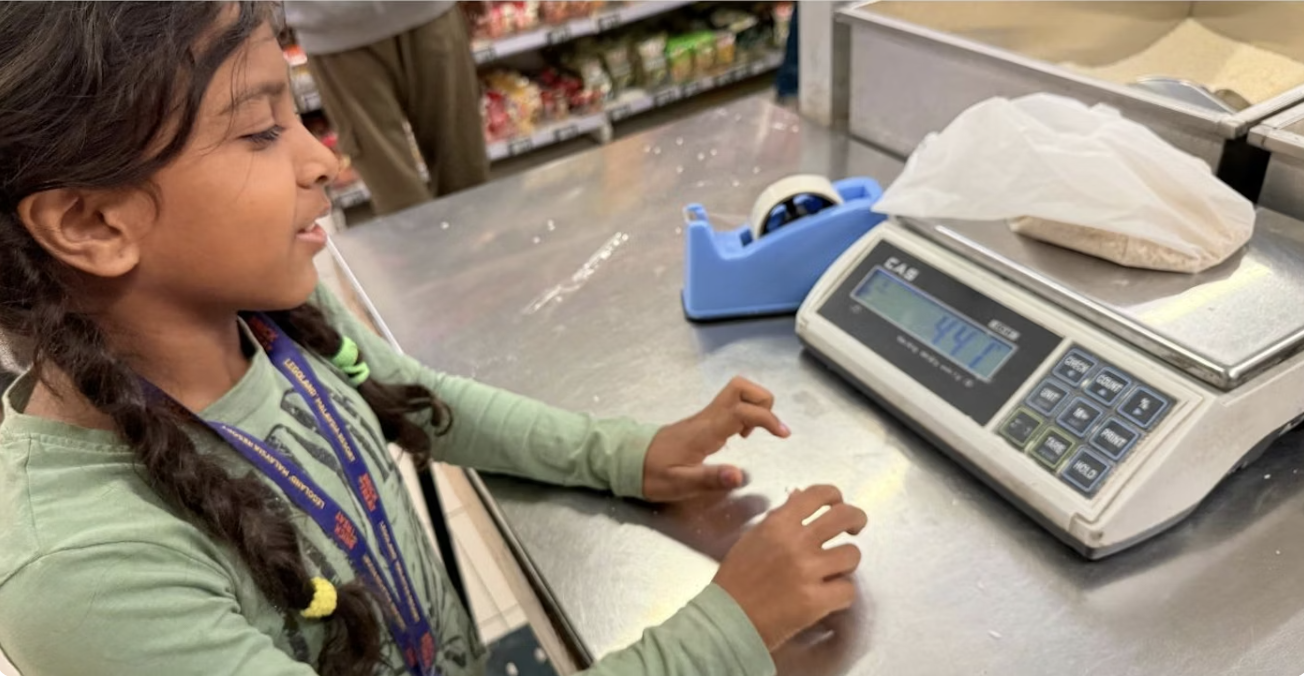
Learning about measurement at age 8. Photo shared by a Child of the Redwoods family.
Through our Foundations of Montessori: Elementary course, you’ll learn:
How to support your child as they plan and complete longer projects
How to strengthen reading and writing through literature, research, and creative expression
How to guide multiplication, division, fractions, geometry, and problem solving with hands on materials
How to connect science, history, geography, language, art, and mathematics through interdisciplinary learning
How to give your child more ownership while providing the structure they still need
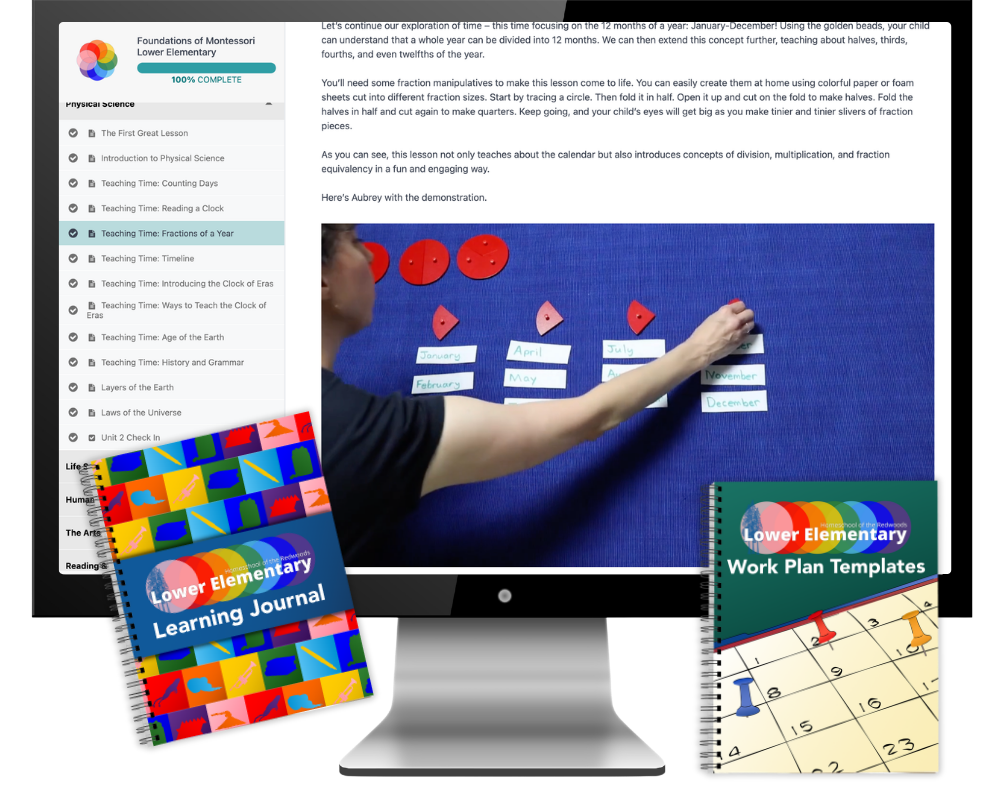
They are learning how to form questions, gather information, evaluate ideas, and create something that reflects their own thinking.
You do not need to direct every part of that process.
You need a clear way to guide it, and that is what helps your child the most.

Becoming a Leader
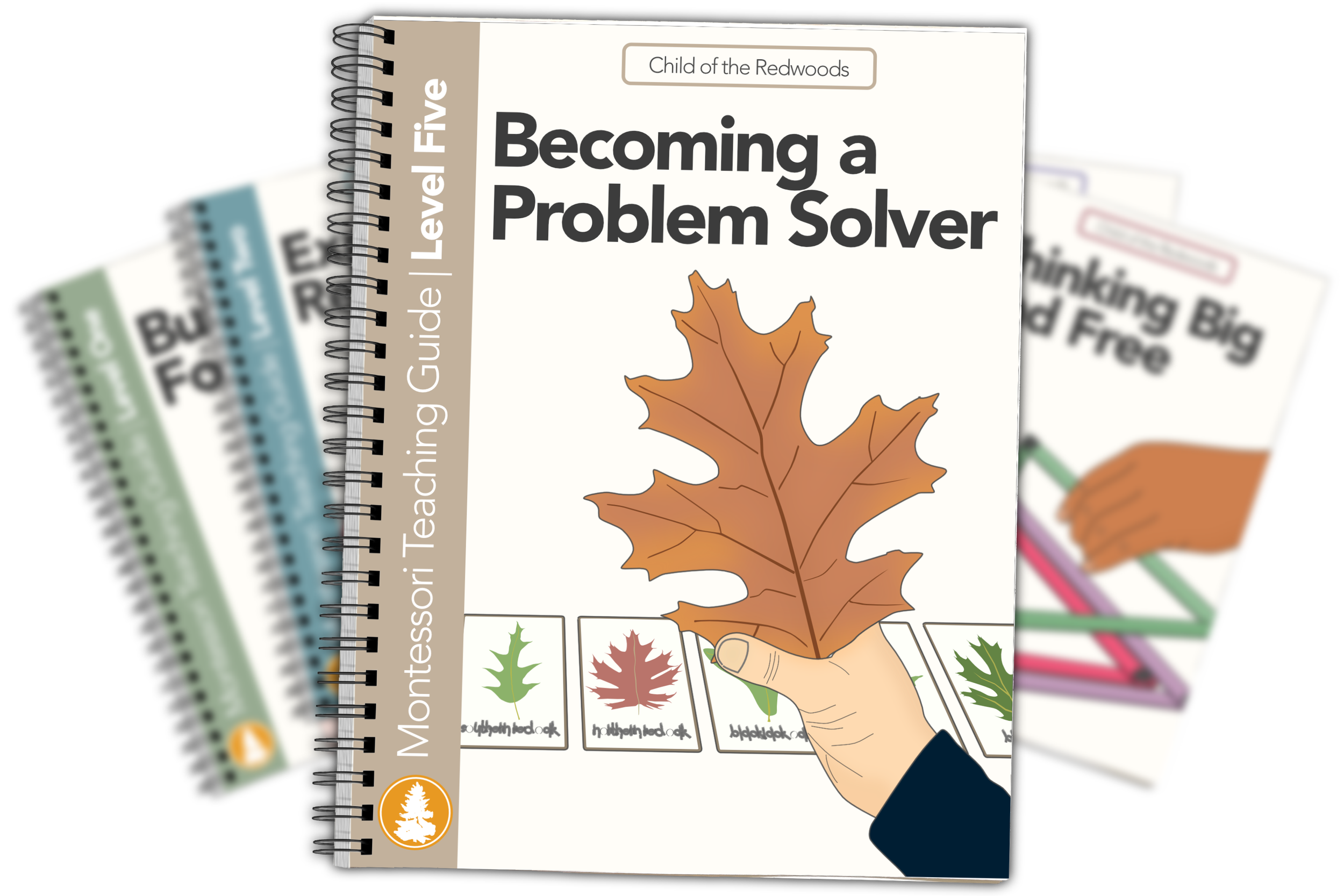
Many eight year olds continue to thrive in Level 5 as they strengthen their skills and explore increasingly rich, interdisciplinary lessons.
Every child follows a unique path, so if you're new to Montessori or your child is learning at a different pace, we'll help you choose the level that matches your child's readiness and experience.
What Your Child Will Experience
These are just a few of the real lessons families enjoy inside Child of the Redwoods.
Research an ancient civilization and present discoveries to the family.
Solve multiplication and division problems with Montessori materials.
Explore fractions, geometry, measurement, and mathematical patterns.
Draw detailed maps with countries, capitals, rivers, and geographic features.
Design and document original science experiments.
Create models, sculptures, or dioramas to communicate complex ideas.
Write fictional stories, personal essays, and early research reports.
Discuss ethics, kindness, responsibility, and fairness through literature and real life questions.
Every lesson is thoughtfully designed to help your child think deeply, connect ideas, and create purposeful work they can feel proud of.
A Theme Your 8 Year Old Might Just Love
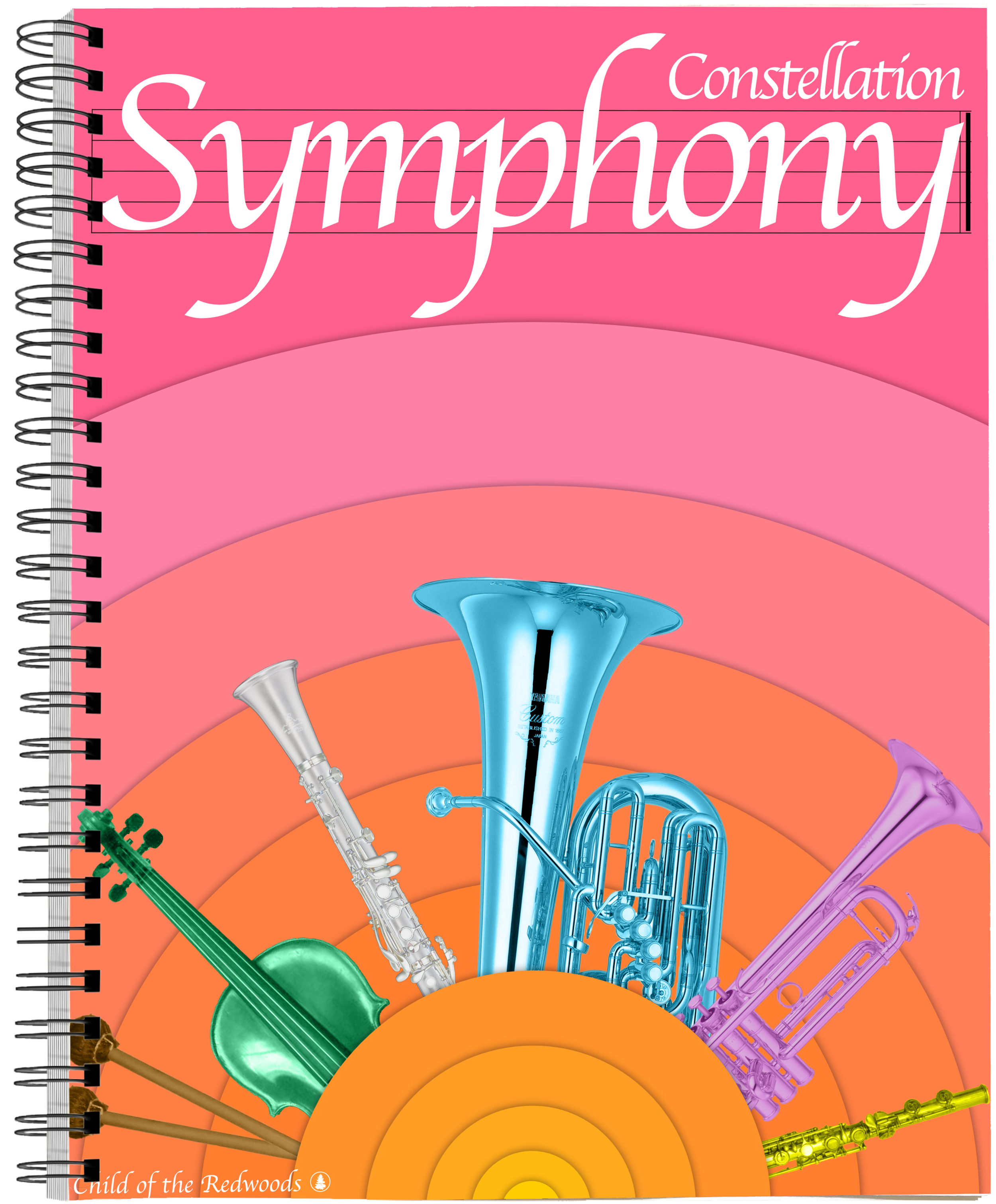
Eight year olds are beginning to see patterns everywhere. They connect ideas across subjects, appreciate beauty in new ways, and enjoy exploring how different pieces come together to create something extraordinary.
Our Symphony theme invites your child to discover the world of music through history, science, mathematics, art, and culture, helping them see that learning, like a symphony, is made even richer when everything works together.
A Complete Montessori Homeschool for Your Elementary Learner
Everything inside Child of the Redwoods is designed to help your child explore complex ideas without leaving you to assemble an entire elementary education by yourself.
Know what to teach next as your child’s abilities and interests expand.
Connect reading, writing, math, science, history, geography, and art.
Support long term projects with clear lessons and helpful structure.
Teach advanced concepts with confidence, even when they are new to you.
Give your child room to think, investigate, and create independently.
Receive support through the ordinary questions and complicated homeschool days.
Continue Exploring Montessori by Age
Children grow in their own unique way. If you're curious about what comes next, or want to compare stages, keep exploring.
← Previous Stage
Montessori for Your 7 Year Old
Discover how to help your child take greater ownership of their learning.
Next Stage →
Montessori for Your 9 Year Old
Explore how to support your child’s new sense of self and well being.
Every stage is wonderful.
Browse the complete Montessori by Age guide to learn more.
Ready to Start Montessori with Your Elementary Learner?
Your eight year old is ready to investigate important questions, make surprising connections, and develop new leadership skills.
You do not need to plan every discussion or project in advance.
You just need a soft, solid place to begin.
What if your homeschool routine felt effortless because it was perfectly created just for you? Take this quick & fun quiz to imagine your ideal homeschool day.