How to Start Montessori Homeschooling Without a Teaching Degree
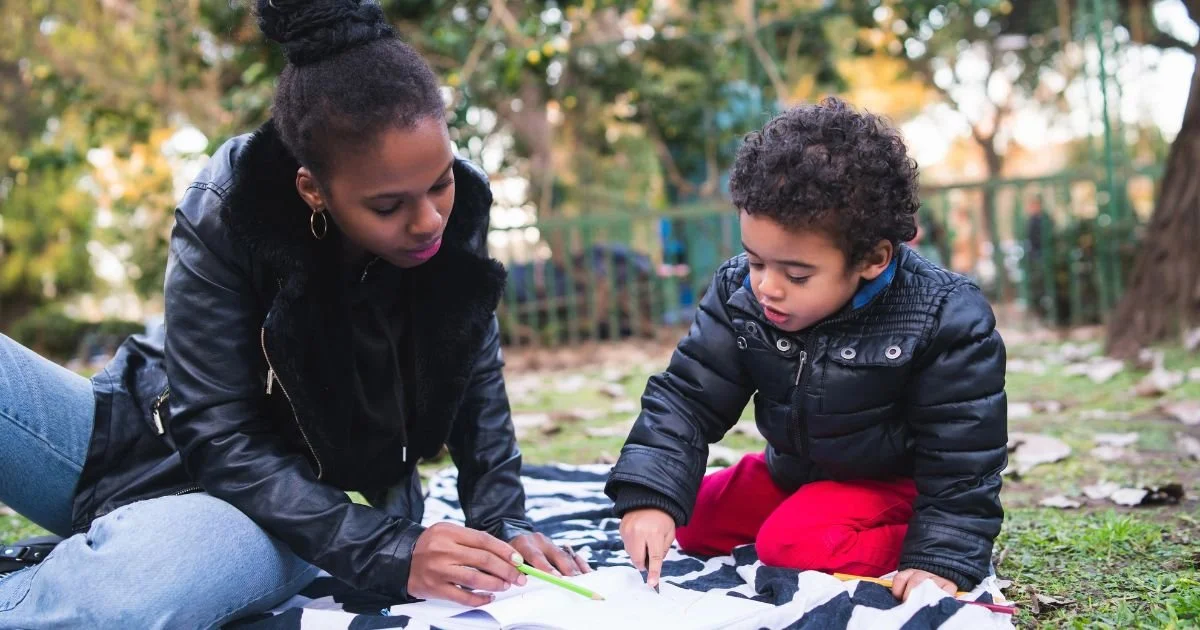
One of the biggest barriers to homeschooling is the persistent belief that effective teaching requires a certificate or degree. Not only is this completely untrue, it’s harmful for the very confidence and perseverance required for the homeschool educator.
And in the Montessori community, you may have already encountered the question of whether you have obtained Montessori “training”. And if so, like most Montessori parents, you’re probably wondering what credentials are exactly necessary.
Thoughtful, capable parents around the world talk themselves out of starting Montessori at home simply because they don’t have a background in education. Let me reassure you in this article. You are qualified to do this.
We’ll look at what Montessori training is actually for, what matters far more than a teaching degree when homeschooling, and how a thoughtfully designed Montessori curriculum can guide parents one lesson at a time as they learn alongside their child.
This is one piece of a much bigger Montessori picture, and if you want to see how it all fits together across ages and subjects, you can explore the full framework in our complete guide to Montessori homeschooling.
Formal Montessori Training Is Right For Some, Not All
There are absolutely times when Montessori training is completely necessary. If you will be starting a Montessori school or looking for a job teaching in a Montessori classroom, whether public or private, you will want to get the best Montessori training available to you. For most people, that means enrolling in Teacher Education Program (TEP) that fully certifies Montessori guides.
In an excellent Montessori TEP, such as those offered by AMI or AMS, you typically take classes on Montessori education that includes either an year long in-person internship or intensive set of observation hours observing a trained and experienced Montessori guide in a classroom. Your coursework often culminates with both a written and oral exam.
This training prepares them to guide groups of children in a structured classroom environment. Ideally, the coursework covers much more than how to present lessons. It also includes classroom management, record keeping, the prepared environment for many students in a single, contained space, and the logistics of running a school day.
Why don’t I recommend this path for parents who want to teach using Montessori at home? Because homeschooling is fundamentally different.
At home, you are not managing twenty to thirty children in a single room. You are guiding your own child—or children—within a familiar environment built around your family’s rhythms. The level of individual attention is something no classroom can replicate.
Formal Montessori training teaches you how to implement the Montessori method at scale. Most homeschoolers need a different kind of “training”. One that focuses on relationships, trust, and intuition.
Our Foundations of Montessori courses were created with homeschool parents in mind. Instead of preparing you to manage a classroom, they help you understand child development, lesson presentations, observation, and Montessori philosophy in the context of your own family, one lesson at a time.
Your child does not care whether you have a teaching degree. They do care whether you are ready to learn along with them.
Becoming a Montessori Guide at Home
So if formal training isn't the deciding factor, what actually helps parents succeed with Montessori at home?
From my own experience, consistency beats expertise every time. Showing up regularly and putting your best effort in (even imperfectly!) builds far more momentum than mastering all the theory in advance. And patience carries you further than precision ever will. Children learn through repetition and mistakes. Parents do too.
That's also why every lesson in Child of the Redwoods is designed to build on the one before it. The Teaching Guides provide the long term roadmap, so you never have to invent your own sequence or wonder whether you're missing something important.
Here's something worth holding onto: knowing your child deeply and intimately is your superpower. You already understand their temperament and sensitivities. You’ve witnessed many of their interests as they emerge. You’re already creating daily rhythms that work for your family.
No outside teacher could ever understand your child as much as you do. This knowledge is powerful! It’s going to do a lot of the work in helping you to become a fantastic Montessori guide for your child.
Taking the Pressure off First-Time Homeschooling Parents
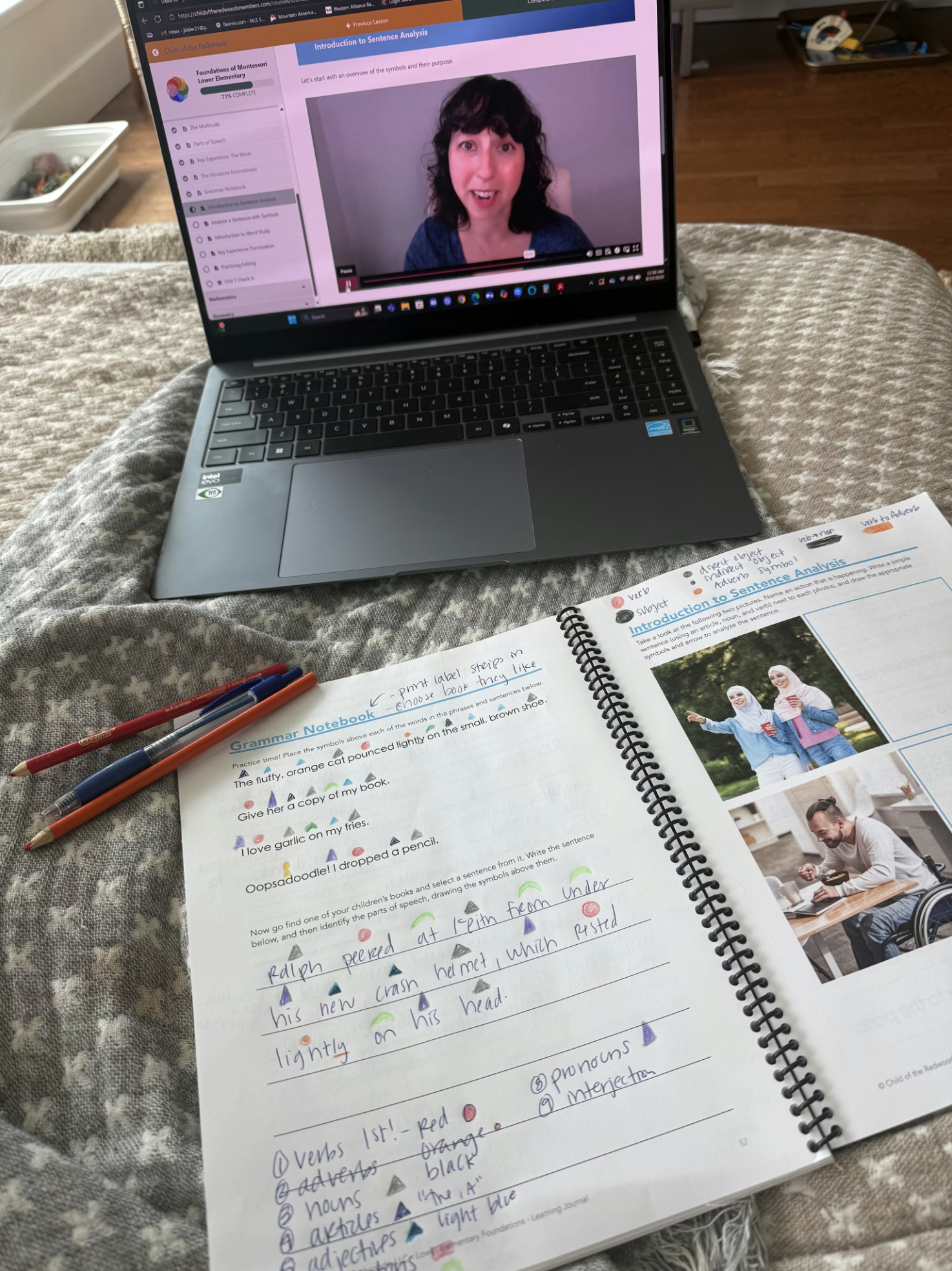
Working through our Foundations of Montessori courses for parents. Photo shared by a Child of the Redwoods parent.
Beginning Montessori can be intimidating, but it doesn’t have to be! Inherent in the philosophy is that we are all born learners, and that through practice and dedication, we can all gain skills. Children are especially intuitive and quick learners. What they are interested in, they naturally desire to practice more often. Over time, they gain both knowledge and skills.
Your job will be to learn to observe your child’s interests and provide opportunities for them to engage. You’ll also be doing quite a bit of demonstrating with materials and modeling activities, showing your child that you, too, are interested in playing with and learning about new things. See? That doesn’t sound too hard, does it?
Many parents are surprised by how quickly this begins to feel natural because every monthly Theme Pack includes fully scripted lessons and a Walkthrough Video where we personally take you through the month's activities before you begin teaching. Instead of wondering where to start, you can simply follow along and learn as you go.
The Montessori method is designed so that your child, not you, does most of the work. Your role is less “teacher” and more “guide. The materials you’ll be using, whether DIY’d or purchased, will provide your child with clear sensory feedback so that they can fix their own mistakes. (No need to point them out or correct your child.) The method itself takes so much pressure off. You are not expected to constantly evaluate or intervene. You’re observing and supporting. Your child is working to master concepts one at a time.
Meanwhile, you're learning one lesson at a time, too. That's exactly why our curriculum includes both fully scripted lessons and self paced parent courses. You don't have to become an expert before you begin. You grow into the role naturally as your confidence grows.
In other words, no expertise is necessary! Maria Montessori herself declared that the best guides she worked with were the ones who weren’t previously teachers. She said that this was because no re-learning of teaching techniques would be necessary. New teachers often are more open to new, creative ways of doing things.
And when new questions come up, you don't have to figure them out alone. Parents regularly bring real homeschool situations to our monthly Office Hours, where we talk through Montessori challenges together.
You and your child will both be “new” to Montessori, and that’s a-okay.
You Don’t Have to Memorize Every Lesson
Perhaps you’ve made the internet rounds and heard that Montessori is too hard for homeschoolers because you have to memorize all of the lesson steps ahead of time and present things “perfectly”?
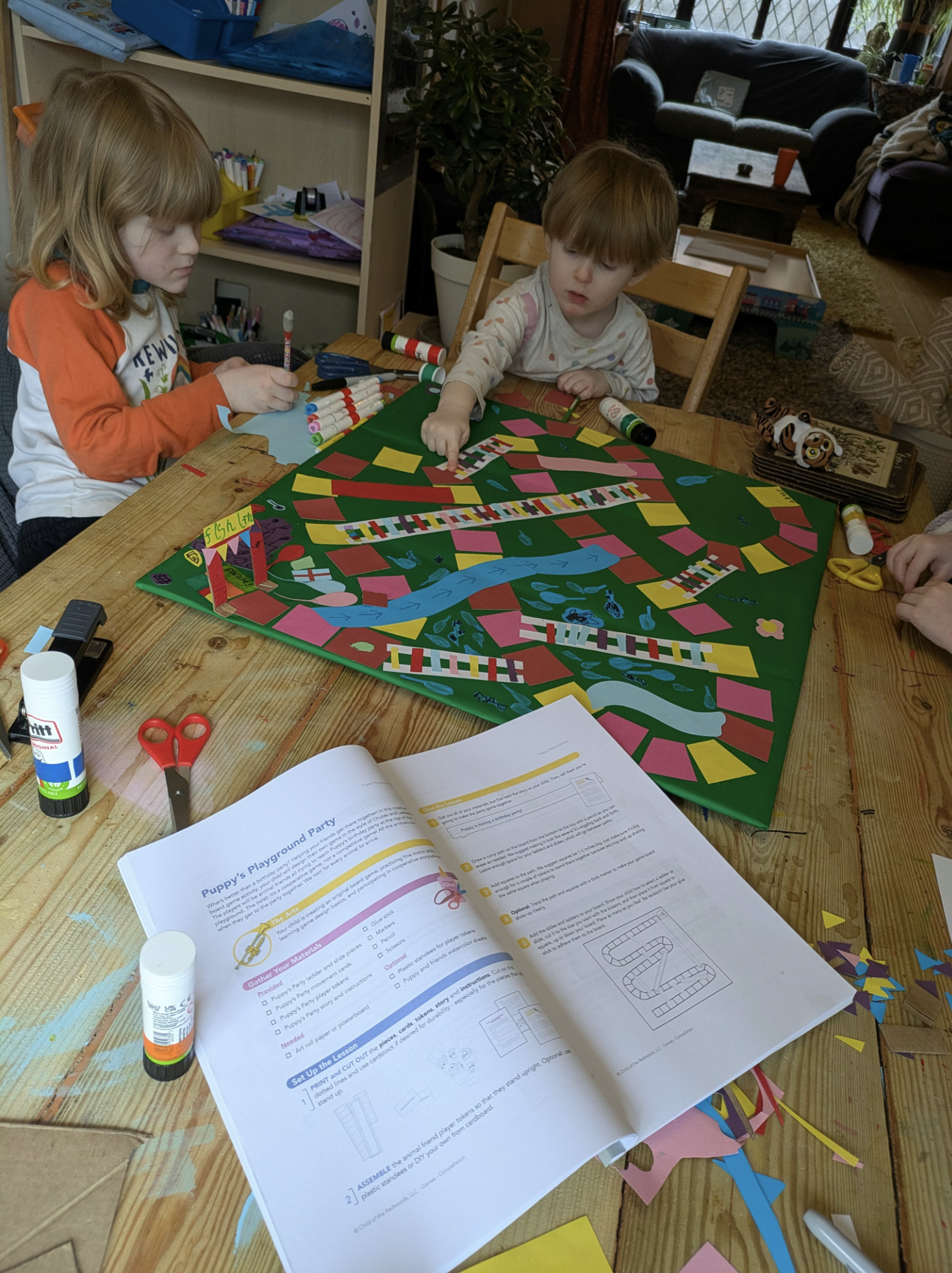
Using a fully scripted Montessori lesson with the theme “Games”. Photo shared by a Child of the Redwoods family.
Yeah, this Montessori myth is very pervasive. You are not required to be perfect. Not as a parent and definitely not as a teacher. In fact, if you were to memorize a lesson perfectly and deliver it with flawless precision, I might even say that was a missed opportunity for growth. Just as our children are meant to make mistakes and learn from them, so are we!
There is no need for you to waste your time trying to memorize a full presentation. If you were teaching in a classroom, this approach might make sense because it’s a lot more efficient: you have to divide your time among 20-30 students, remember? At home, you have so much more time to relax and experiment!
That's one reason every Theme Pack we publish includes fully scripted Montessori lessons. You can read through the presentation beforehand, gather your materials, and then simply enjoy the experience with your child instead of worrying about remembering every word.
Children do not care whether you are reading aloud from a book or a lesson plan or from memory. When you “mess up”, you simply model for your child how to correct your mistake. I cannot convey to you how incredibly healthy this is for your child during the lesson-giving process.
Trained Montessori guides often make pretend mistakes during a lesson for exactly this kind of demonstration. I highly recommend that you don’t pretend. Your child will sense it immediately and will be suspicious. Of course, practice the skill first. Think the lesson through. But then allow yourself to make a misstep now and then or to mispronounce and then correct a word naturally. These are lessons for real children in real life, not lessons for robots.
“Doing Montessori right” means embracing the unexpected, all while allowing the scope and sequence and the lesson structure to do its job as your child learns.
How to Get Started Without Having All the Answers
A realistic first step for you would be to try out a fully scripted lesson with your child. Simply read the lesson to yourself before giving it, gather your materials, and do a little practicing beforehand to make sure you know what to do. That’s it.
You don’t need to master the entire Montessori method. You don’t have to set everything up at once. You don’t need to buy all the materials.
Most families begin with just one lesson, then another. As questions come up, they work through the Foundations of Montessori courses, refer back to the Teaching Guides, and gradually become more confident with every presentation. That's a much more natural way to learn than trying to study everything before your child ever touches a lesson.
Just get started with one lesson. Try it out. See how it feels. You will learn as you go. And when you are ready, study the theory and practice behind the Montessori method. It will teach you how to observe your child, document what you see, and choose the lesson that is most appropriate for your child’s level.
This is your own Montessori training, but in the context that actually matters. You're learning while teaching your own child. The parent courses, Teaching Guides, and scripted lessons work together so every new concept immediately becomes something you can practice together at home.
You Are Already Qualified to Begin
You do not need formal credentials to teach your child well at home. If you already have a teaching degree, that’s fine, too -- but you will likely need to learn some new techniques that are Montessori-aligned.
Montessori homeschooling was designed to be accessible for everyone, and your Montessori journey will unfold gradually along with your child’s. If you haven’t started yet, you are not behind, and you certainly aren’t unqualified.
If you'd like to see what learning Montessori alongside your child can actually look like, explore our complete Montessori homeschool curriculum for ages 2 through 9. You'll discover how the Teaching Guides, Foundations courses, fully scripted lessons, and monthly Theme Packs work together to help ordinary parents become confident Montessori guides.
Don’t overthink this. You’re ready!