
Learn Montessori While Teaching Your Child
Feel more confident with every lesson you give.
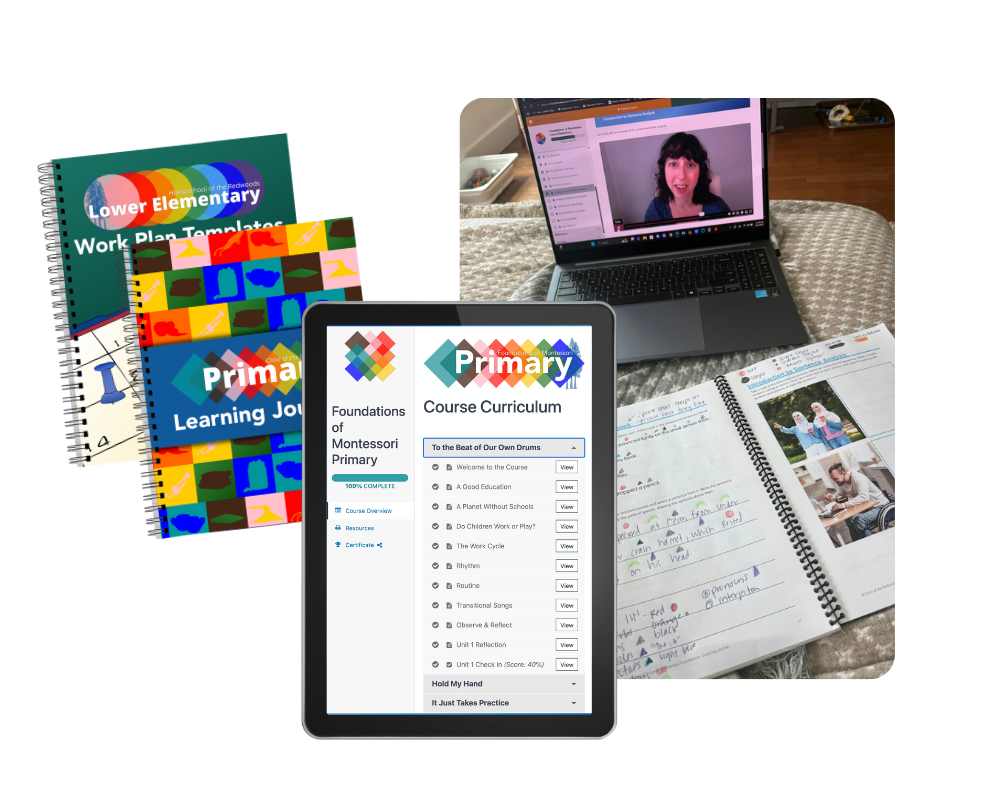
The Foundational lessons are supported by Montessori courses, demonstrations, and practical guidance designed to help you understand not just what to teach, but why it matters.
You sit down with your child, ready to do Montessori at home. But you’re still wondering: What am I actually supposed to do here? How do I show the lesson? A quick search online confirms your hesitation: Montessori guides at schools are trained and certified.
But your child cannot wait. Your child needs Montessori now. The days are long, but the years really are short!
Don’t fret about this. You’re ready to learn Montessori, and you don’t have to get certified in order to do a great job at home.
You Don’t Have to Know Everything First
It’s easy to assume you need to understand Montessori before you start. That you should study the method, learn the materials, and feel confident before you begin teaching.
But this mindset works against us as parents. Gosh, we are so busy. We’re making breakfast, and putting the groceries away, and trying not to let the toys take over the living room. We’re answering the phone and retrieving deliveries and scheduling play dates, and watching the clock for bedtime.
Our children need lots of supervision, and we certainly can’t clone ourselves, so we’re doing all we can do as it is.
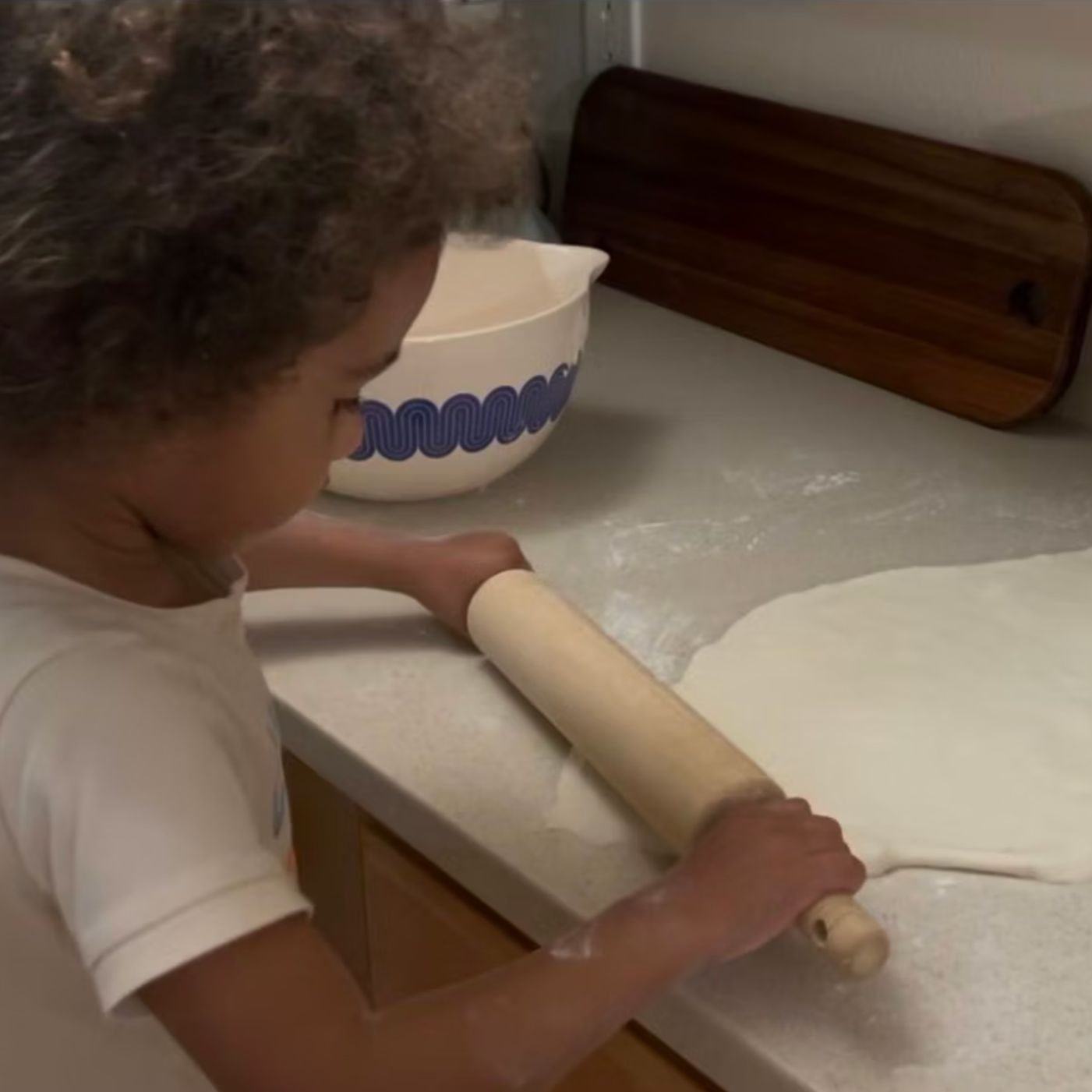
Simply cooking together: a perfect Montessori beginning! Photo shared by a Child of the Redwoods family.
Let us bring you some calm.
You’re not stepping into a classroom to teach a large group of children. You’re learning alongside your child, one lesson at a time.
That means you can begin before you feel fully ready.
In fact, most parents do!
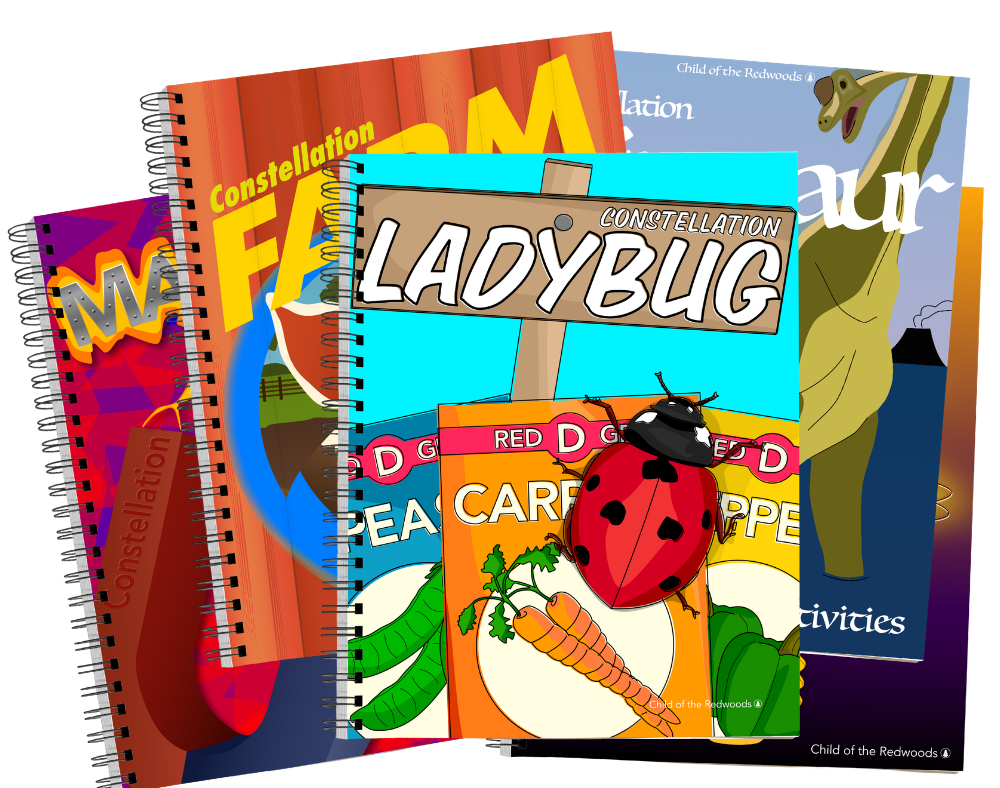
Inside Child of the Redwoods, you begin with your first theme of the month. Each activity is fully scripted and ready for you to explore right away.
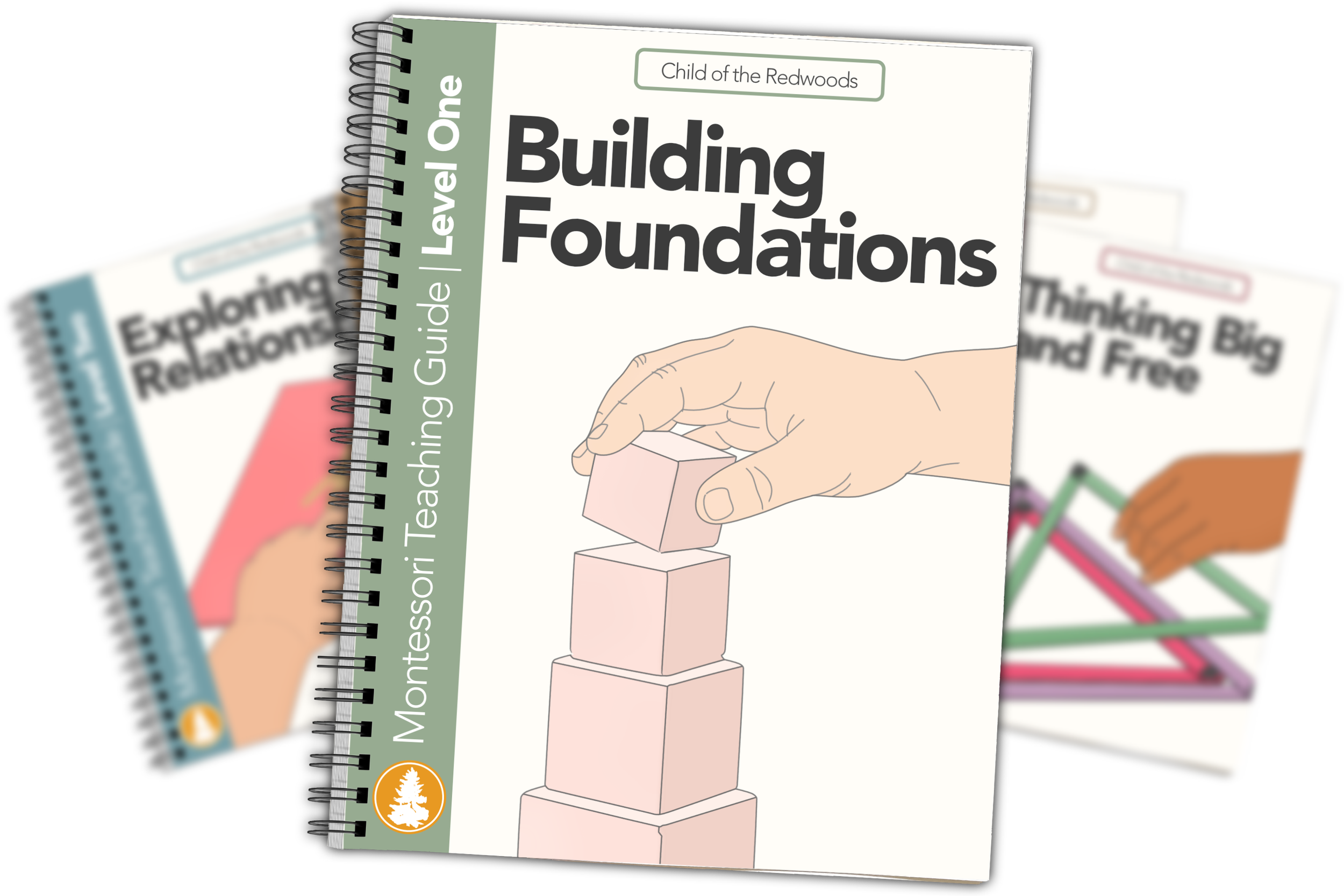
As you get comfortable, you’ll also start adding in short, foundational lessons in your Montessori Teaching Guides that explain why each presentation works and what to look for as your child grows.
You Learn By Doing
+
You’re Guided Along the Way
Inside Child of the Redwoods, you’re not left to figure this out on your own.
You will be well resourced!
In the member’s area, you’ll find comprehensive Montessori homeschool courses that walk you through Montessori in a way that fits naturally into your day. You’re not sitting there trying to memorize everything upfront.
Instead, you learn in context.
Each lesson includes engaging instruction, reflection questions to help you process what you're learning, and short check in quizzes that reinforce the concepts without feeling overwhelming.
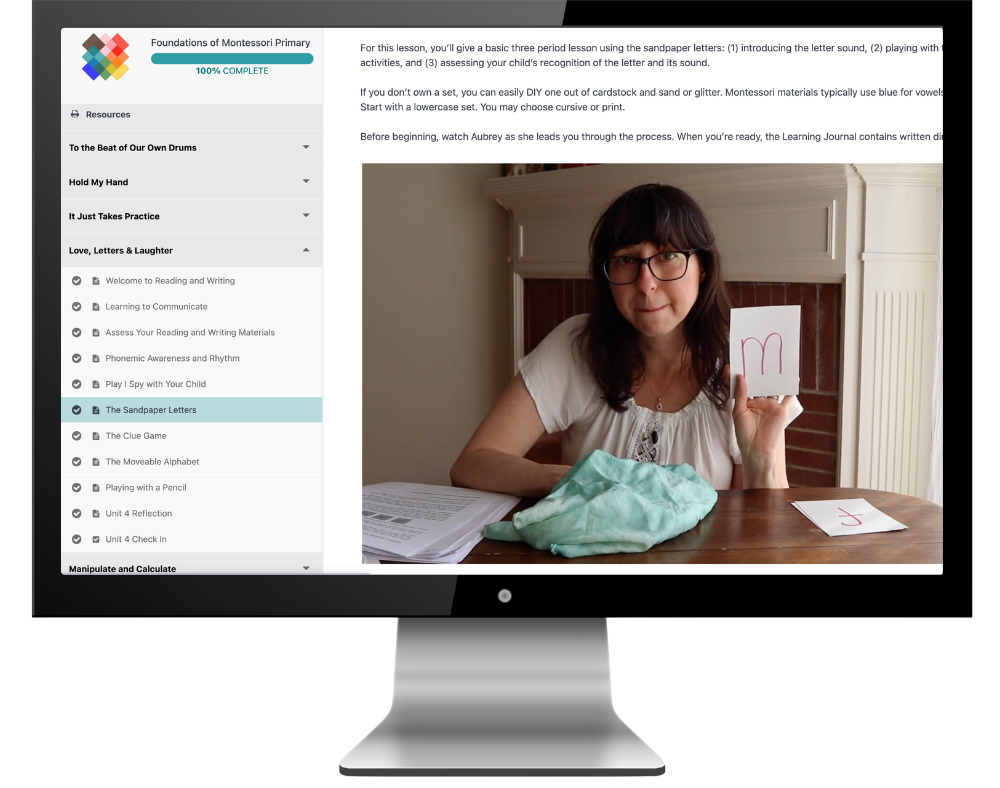
In the Primary course, you’ll watch Aubrey giving you short demonstrations of a technique or hands-on material for young children. You’ll try it with your child, and then come back with a deeper understanding.
You'll also begin noticing your child's concentration, curiosity, repetition, and growing independence, which become some of your most valuable teaching tools!
You’ll learn the method with things you likely already have around your own home — or materials you can make very quickly DIY so you can practice with the course, even if you don’t have all the classic Montessori materials.
The Primary lesson above is teaching you how to play sound games with your child with just letters written on paper, a few toys, and a scarf.
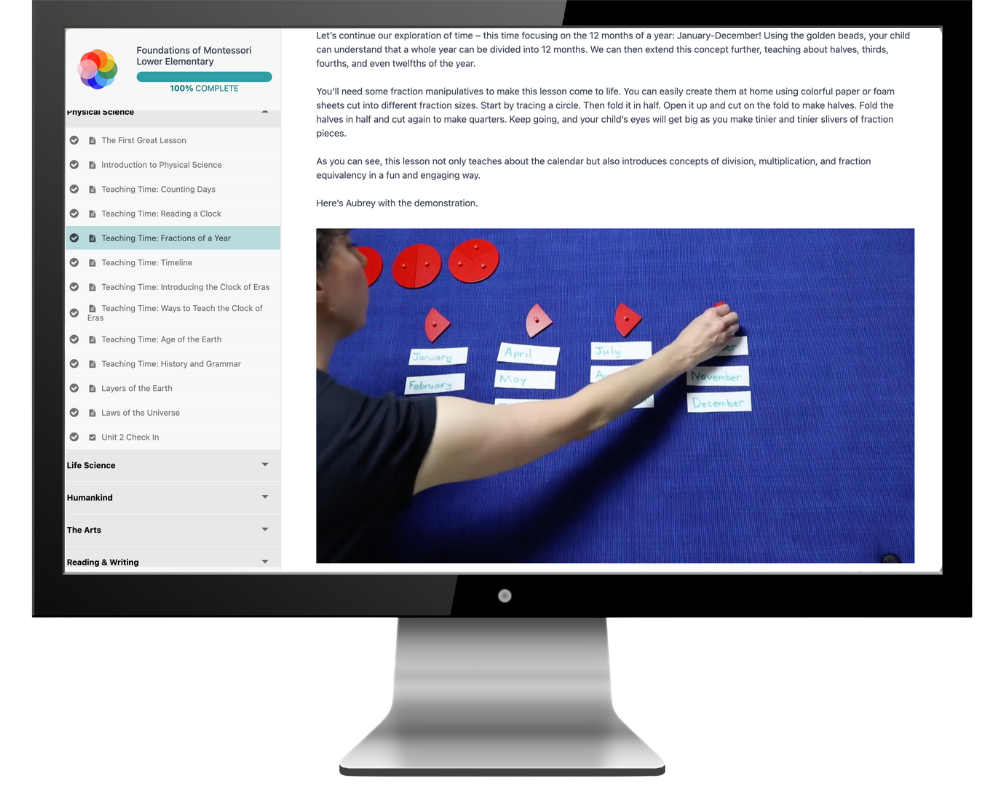
Our Foundations of Montessori Elementary course will guide you through the sequence subject by subject, with plentiful demos of essential and authentic Montessori lessons taught with the same, low key, DIY-friendly, playful vibe.
You’ll be doing playful activities with your child and learning the Montessori method at the same time.
Yes, you can do this! You’re going to be a fabulous guide for your child, just like the thousands of homeschooling families who have learned along with Child of the Redwoods.
It Starts to Feel Natural
At first, you might pause and think through each step. But over time, you begin to recognize patterns and the teaching techniques begin to feel more instinctive.
You understand the purpose behind the lessons. We offer hands-on experiences that are aligned with the developmental needs of each child. You’ll understand the big picture behind each subject area, like practical life, sensorial, math, language, and more. Soon you'll recognize why a Practical Life lesson prepares for writing, or how Sensorial work quietly lays the foundation for mathematics.
Many parents enjoy using the Learning Journals to reflect on what they're noticing as both they and their child grow together. Observation handouts and work plan templates are included to


As your confidence grows, you'll also want a clear roadmap showing what to teach next. We have one for you!
You Already Have Your Greatest Qualification
Here's something I wish more parents knew.
The most important qualification for teaching Montessori isn't a classroom teaching certificate.
It's knowing your child.
You already know what makes your child laugh until they can't catch their breath. You know when they're tired, when they're fascinated by something new, and when they're ready for a bigger challenge. You know whether they'll spend an hour quietly building with blocks or come running to tell you every exciting discovery they make.
No Montessori training program can teach that.
The curriculum teaches you how to present the lessons.
The Foundations of Montessori: Primary and Elementary courses help you understand the complete Montessori method for every single subject area.
Your observations show you when your child is ready for the next step.
Put those three things together, and something transformative begins to happen.
You stop trying to become someone else's version of a Montessori guide and start becoming your child's.
That's the guide your child has needed all along.
This Is What Real Learning Looks Like
You are on a learning journey alongside your child, and there’s no one better prepared for it than you, the parent. You know your child already. You have seen them at their most joyful and their most sorrowful. You know if they’re the more cautious type of kid or if they run headlong into the next adventure. This intimate knowledge will make you a better teacher.
And you don’t need to become an expert in Montessori overnight. You don’t need to get every detail exactly right.
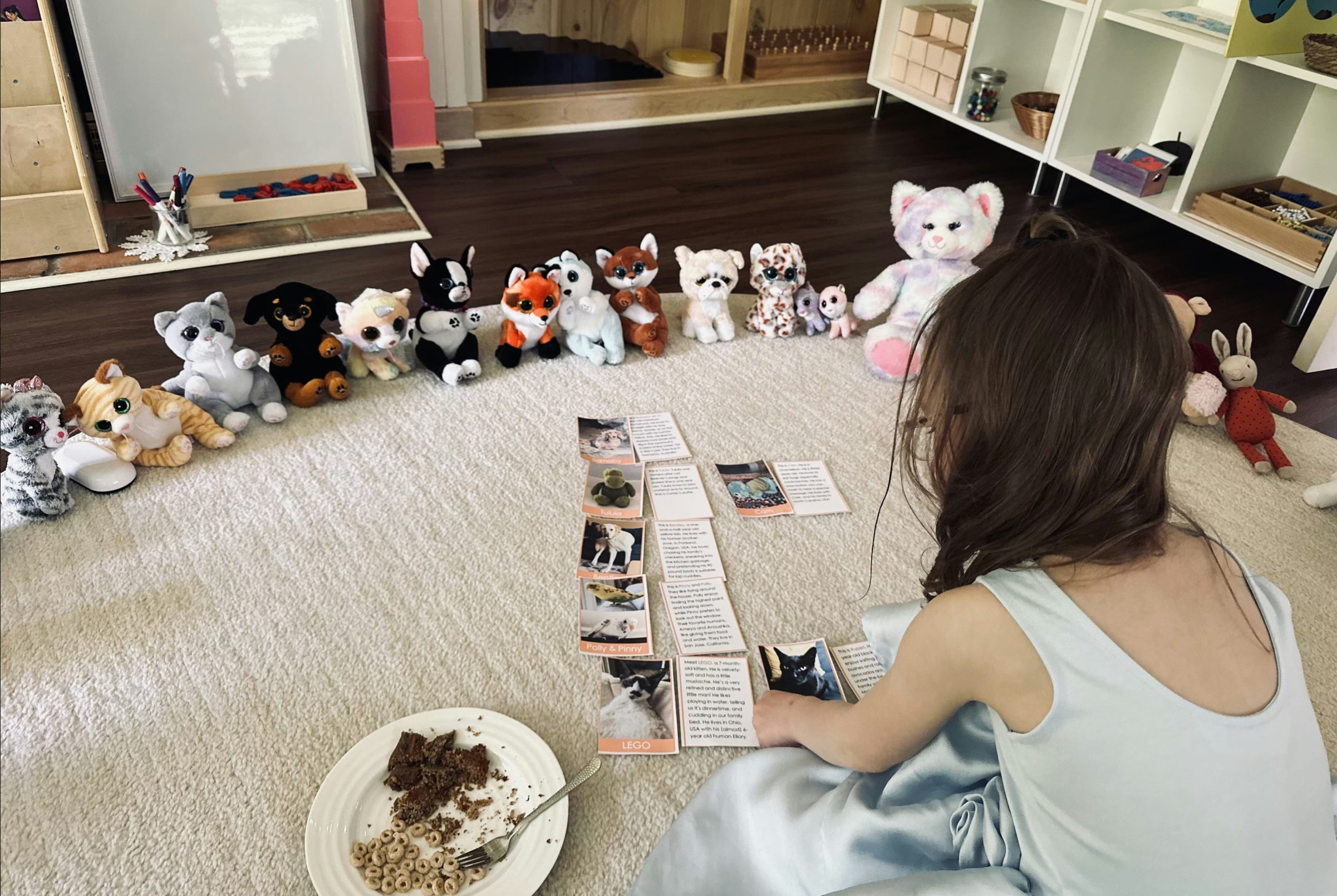
Learning through pretend play. Photo shared by a Child of the Redwoods family.
You just need to take the next step.
Then the next.
And as you do you’ll start to realize how much you have grown, too! We all want our children to become life-long learners, and that’s what you are modeling for them. The joy of learning new things never stops!
You’re Not Behind
“But we haven’t done this activity yet!”
“Have I missed a sensitive period?”
“Is it too late to begin?”
If you’re feeling unsure or like everyone else is already miles ahead of you, this is so common. Most parents start right here, feeling a little FOMO.
I promise -- you’re not behind. You’re at the beginning of something new.
And it’s never too late to start Montessori! Because the curriculum is organized by developmental readiness instead of age, you'll simply begin at the level that matches your child today and move forward from there.
You’re right where you are meant to be.
And whenever you have questions, you'll have Office Hours, coaching, and a private community full of families who remember exactly what it felt like to be starting out.
If you want to see how this fits into your full Montessori homeschool, you can see how Montessori at home works step by step.
Keep Exploring
Every family begins somewhere different. Explore another part of the guide whenever you're ready.
Start Here
A calm, step by step guide to getting started with Montessori at home.
← Return to
Start Here
Don’t overthink it. You’re ready.
Encouragement whenever you need it.
Follow your child and teach at the right skill level.
See your progress through the curriculum.
See what it’s like to actually Montessori homeschool.
Ready to begin…even if you don’t feel fully confident yet?
Start with your first lesson, and let the curriculum teach both you and your child together.