

Our Montessori Homeschool Philosophy
Staying True to Montessori While Supporting Real Families
We believe parents are capable of teaching their own children. Montessori belongs in every home. Learning should be joyful, playful, and rooted in love.
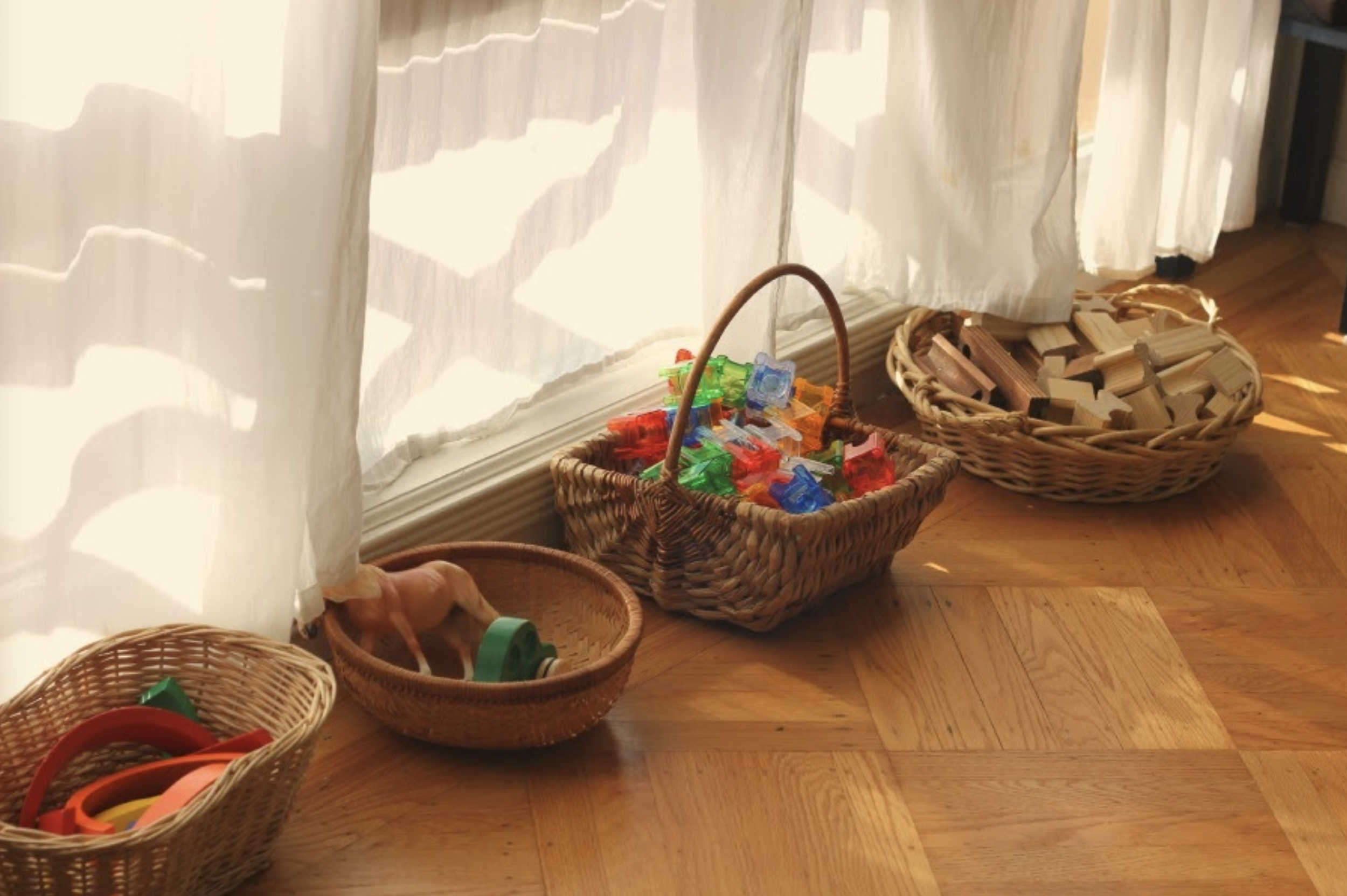
Have you ever stopped and watched your child working on something they simply had to figure out? Their little fingers tensing. Their brow adorably furrowing in oncentration. The repetitive movements again and again, determination written all over their face? And then at last — that sweet smile of accomplishment that comes right after!
These moments are precious. They are Montessori moments.
Dr. Montessori’s revolutionary work has touched millions of families around the world. Parents continue to be fascinated with the unique and special way children learn and grow. Since the very beginning, curious they have wondered:
Can the Montessori method be applied at home?
Can parents successfully guide their own children?
And how much can be adapted before it stops being Montessori?
At Child of the Redwoods, we've spent years pondering these questions, too, and advocating for an approach rooted in authentic Montessori principles with the flexibility needed by families of all cultures and backgrounds.
No one gets left out of Montessori! All families are welcome!
We believe Montessori is much more than a collection of beautiful classroom materials and specific lesson presentations. Montessori allows us to understand children more deeply and respect their stages of development. It gives us a direct path to joyful, purposeful learning.
That's the foundation of everything we create.
Our curriculum is both Montessori and thoughtfully designed for the realities of homeschooling. We don't believe families should have to choose between staying true to the method and having the support they need to homeschool with confidence.
We believe Montessori belongs just as naturally around a kitchen table, in a backyard garden, or beside a sink full of dishes as it does inside a classroom.
Alongside my husband David, we've spent years building Child of the Redwoods to make authentic Montessori homeschooling accessible to more families.
Throughout this page, we'd like to show you exactly what we mean by sharing the principles that guide every lesson we create and every decision we make.
A Note from Aubrey Hargis, M.Ed.

I've spent nearly 30 years studying Montessori, designing curriculum, and supporting thousands of homeschooling families both in the classroom and at home. During that time, I've discovered something pretty amazing.
Families who want to do real Montessori at home…do! They do it with and without the classic materials. They do it in their backyard, on a budget, in co-ops with friends, in tiny apartments, and even while traveling!
Parents are extremely capable of applying the Montessori method with a good curriculum, a heap of determination, and solid mentorship.
We did it, and we know you can, too! If you’re curious about how Child of the Redwoods came to be, you can read Our Story.
You don't need a perfect classroom to give your children a beautiful, authentic Montessori education. What you do need is the confidence to get started giving lessons and a deep understanding of Montessori's principles.
The children in families who adopt this philosophy flourish with a love for the whole universe, and I am always in awe.
That is the perspective behind everything you'll read on this page.
What Montessori Is Really About
When most people picture Montessori, they picture gorgeous classrooms full of materials and lots of low wooden shelves, and to me, those classrooms feel like home. I walk in and feel instant peace.
Montessori schools take me right back to my childhood growing up in a close-knit Montessori circle of gifted teachers, pulling up the old carpet and painting the walls of what would become, to my adoring 9-year-old eyes, the most magical Montessori school that ever existed. That’s the school where I would learn how to give my first lessons.
Maria Montessori’s own first school ever was christened the Casa dei Bambini, or the “House of Children”. She wanted to create a classroom that felt just like home: warm, light-filled, cozy, nature-centric. She filled it with all kinds of toys and educational materials and then watched the children closely and took notes on what they were most drawn to. She hired a teacher who was willing to step back and let them be. She let them come and go into the garden at will.
And then she sat on the floor and played games with them, laughed with them, loved them.
The Montessori classrooms of today have evolved, but Montessori’s vision still guides today’s educators, and it should.
Creating your Montessori environment at home has a few extra benefits attached. First, it’s already your home, so you likely have the warm and cozy part covered. Optional: add a few plants or nature items, a little shelf to house lesson materials, plus a rug or a small table to work at, and you can have a lovely space for teaching your child.
Now the most important part of Montessori: following the child.
Montessori education begins with a simple but powerful belief that every child is naturally driven to learn. Given the right environment, meaningful work, and respectful guidance, your child doesn't need to be pushed toward learning. Your child is compelled by their very developmental nature to do it.
You follow your child when you…
validate their interests
get curious about their development
offer activities that challenge them just enough
show them what to do first before explaining
refrain from interrupting their work
provide a calm, less stimulating space for learning
let them teach themselves
That's why Montessori is much more than a collection of materials or lesson presentations.
It requires a lot of the educator: a totally different mindset than we are used to seeing in traditional education where the teacher is the center of attention and in control.
To do Montessori, whether in the home or in the classroom, you must have faith that your child will learn what they need to learn, in their own time. That the learning process cannot be rushed. That your role is very important but that your child’s role as learner is entirely unique.
To be a a Montessorian, you adopt a set of habits that transform your heart and open your mind to the child’s very way of being.
This is not a method that belongs everywhere, with every child, all the time.
When your child helps prepare a snack instead of waiting to be served, that's Montessori.
When you pause to notice what your child is ready for instead of comparing them to someone else's timeline, that's Montessori.
When joy sparks from purposeful work instead of a reward, Montessori is alive and well!
That's the foundation I've returned to throughout my years as a Montessori educator, and it's the foundation we return to every time we create a lesson, sequence an activity, or support a homeschooling family.
Because while homes and classrooms look different, children's developmental needs do not. They are universal.
Dr. Montessori's greatest contribution was not a particular set of materials or a set of lesson presentations that must never be changed or modified.
She taught us adults how to respect children.
And we believe that those timeless principles belong in homes just as much as they belong in schools.
What Makes a Montessori Homeschool Curriculum Authentic?
Once you begin exploring Montessori more deeply, you'll quickly discover that people use the word authentic in different ways.
For some, authenticity is closely tied to a specific type of teacher certification (such as the training offered by AMI or AMS), or more broadly, a Montessori classroom and its long-standing traditions.
For others, it has to do with whether the educational philosophy remains intact, even when it's thoughtfully adapted for a different environment.
At Child of the Redwoods, we believe an authentic Montessori homeschool curriculum should remain faithful to the principles Maria Montessori discovered about how children learn.
That means respecting your child's development instead of expecting every child to learn in the same way at the same time.
It means moving from concrete experiences to abstract understanding, and allowing children to build their knowledge through hands on exploration before expecting them to memorize information or facts.
It means encouraging independence by giving your child purposeful opportunities choose their own work, solve problems, and care for their bodies and the others around them.
It means observing your child to admire what they can do instead of seeing how many answers they got wrong on a test created by someone who never knew them personallly.
It means preparing an environment that is emotionally safe and full of rich and interesting things to see, touch, taste, listen to, and smell.
These principles are part of the Montessori method.
They're also the standard we return to whenever we create a lesson, design a sequence, or ask ourselves whether something truly belongs in our curriculum.
But that’s not all. If you dig deeper into Montessori, you realize there is quite a bit of structure along with all the precious “follow the child” moments:
there are specific ways we present lessons to a child
there are clear sequences to how we teach reading, writing, and math
there are specific subjects covered during different developmental stages
there are distinct purposes for each and every one of the Montessori materials
there are ways we prepare en environment and ourselves as guides
These are also part of the Montessori approach, and an authentic Montessori homeschool program ensures that parents are equipped with the knowledge and skills to fully implement them.
A homeschool will never look exactly like a Montessori classroom.
Nor should it.
Your homeschool is the same as the home you actually live in. Your daily rhythm is your family’s real life to-do list.
But children are just children, no matter where they are. They’re moving through developmental stages all the time, always open to learning new things.
That's why we've never tried to recreate a classroom inside your home.
Instead, we've worked to preserve the principles that make Montessori so transformative while designing a curriculum that helps you live and breathe those principles every day.
When we say our curriculum is built on authentic Montessori principles, this is what we mean.
The Conversations That Shaped Our Curriculum
People sometimes assume that adapting Montessori for homeschooling means lowering the standard.
We emphatically disagree.
For years, I've worked as a Montessori educator and curriculum creator, supporting thousands of homeschooling families as they learned how to teach their child the Montessori way at home, with or without the classic materials. Again and again, I saw brilliant, successful, determined parents wrestling with the same questions.
How do I stay true to Montessori at home?
What if I don't have all the materials?
How do I know I'm making the right choices for my child?
Those questions shaped every decision we've made at Child of the Redwoods, and to be honest, they also shaped me as a parent, even with all the training and resources available to me.
I remember sitting on the floor with my baby in my lap and my three year old playing with his trainset wondering to myself whether I could truly provide as genuine a Montessori education for my children at home as I knew they could receive at a great Montessori school. My husband was working outside of the home full time, and I was plagued with doubts.
By the time my children were older and I began teaching parents how to homeschool with Montessori, I had realized a beautiful truth: it is entirely possible to preserve what matters most about Montessori while helping parents feel capable and supported.
Before teaching my first Montessori homeschool class online, I asked parents what they wished for — and I found that their worries and desires were very, very familiar!
So I began creating resources that would have boosted my own confidence when I was starting out. I wanted parents learning about Montessori to feel organized, inspired, and knowledgeable.
How Child of the Redwoods Brings Montessori to Life at Home
Every decision we make begins here: with the principles of Montessori in one hand and the realism required for everyday homeschooling in the other.
That balance has shaped our curriculum from the very beginning.
Rather than doing what several other Montessori homeschool programs were doing at the time, we did not simply type up the Montessori manuals I used in my training and sell them online to homeschoolers. We felt that parents deserved so much more than that!
What started with a Montessori homeschooling course I taught Live online (the first ever of its kind!) blossomed into a comprehensive homeschool system that helps parents understand and apply Montessori in the places where family life actually happens.
That means every lesson in our foundational Montessori Teaching Guides is part of a carefully planned progression that follows your child's development instead of age. You start with Level 1 and work your way forward at your child’s pace.
Our thematic lessons help you easily offer your child meaningful, hands on experiences that encourage explorations across subjects because children don't naturally separate their curiosity into neat academic categories. An “I wonder” question about birds might include reading, writing, science, geography, and art, all working together in a way that feels natural and memorable.
Every theme is based on a cultural or scientific exploration covered in the foundational curriculum: simple machines, celestial objects, inventions, vertebrates and invertebrates, and more.
It also means recognizing something Maria Montessori understood deeply.
Adults need guidance, too.
After years of supporting homeschooling families, I've learned that parents struggle most when they're carrying the weight of wondering whether they're doing Montessori "correctly."
Parents often tell us they love Montessori but worry they don't know enough to teach it well. They wonder if they're presenting a lesson correctly or whether they're introducing concepts in the right order.
That's why our curriculum includes fully scripted lesson plans and step-by-step directions.
The scripts aren't there because Montessori is being watered down or to make it more teacher-directed.
They're there because parents deserve the same confidence that children experience when learning is thoughtfully prepared.
The scripts provided a starting point for rhythm. As families grow more comfortable practicing the art of giving a Montessori lesson, many naturally begin adapting lessons to fit their own children’s preferences. That's something we love to celebrate. The scripts are a bridge to confidence, not a set of rules to follow forever.
We've also designed the curriculum with the realities of homeschooling in mind.
Many families are learning with more than one child, and that means a Montessori “work cycle” happens during and around babies, naps, errands, family meals, and everyday household responsibilities.
Some days everyone is in flow. Other days don't go according to plan.
A Montessori homeschool curriculum should support those realities rather than pretend they don't exist.
Our goal is to help families create homes where consistent, reliable Montessori principles become part of everyday life, weaving themselves into the messy, wonderful wildness that comes naturally with raising children.
Why Montessori Homeschooling Looks Different From a Montessori Classroom
Often parents arrive at our door a little panicked. They chose Montessori; maybe even read books about Montessori toddlers and were proud of how they raised their little one; then when pressured to “start school”, they backed away from private school tuition; they decided to consider homeschooling; they got sticker shock after adding Montessori materials to their online shopping cart.
And then…they found us.
Conversations with parents in this journey are always a delight for me because I love the moment when they connect the dots and realize with a little lingering hesitation - that what they were hoping to do originally is possible: continue choosing Montessori. Without having to remortgage the house!
But I do understand why there are nerves about doing things the right way. When you care deeply about giving your child an authentic Montessori education, it's natural to wonder whether your home can really provide the same thing as in a classroom.
My honest answer is no.
But don’t let your heart sink with disappointmentyet. Homes and classrooms exist for different purposes and will never operate the same way.
A Montessori school, whether private or public, is carefully curated for a community of multi-age children learning together under the guidance of a trained educator.
Every detail supports that environment, and Montessori guides are known to be meticulous about everything: the materials on the shelf, the lessons, the documenting, the setup and end-of-the-day classroom closing routine as the children depart. As a Montessori teacher who always got to school an hour early, stayed three hours late, and often came to prep the environment on weekends, I would know!
A home is something different.
At home with littles, I typically woke up somewhat sleep deprived, depending on how rough the night parenting was. I wandered into the kitchen with my kids in tow to make my coffee and rummage in the fridge for some ingredients for breakfast. And then the day would begin, whether I was ready or not, despite my complete lack of apparent preparedness.
So I learned very quickly:
It is possible to work on your environment while your kids play
Planning your daily rhythm over breakfast can be a great routine
Feeding the baby is a sweet time to read Montessori books
Lessons on the playground can be mega impactful
Jotting down observations is doable in 2 minutes a day
You can go ahead and check off lessons the kids “taught themselves”!
Corn kernels can sub in as Montessori unit beads
The refrigerator magnets can work as a moveable alphabet
The works the kids create on a tray are hilarious and totally valid
You don’t have to give formal lessons every single day and it can still be plenty
…And so much more!
Life and Montessori become inextricable when you let go of fussy expectations. Your child learns to bake alongside you in the kitchen. Younger and older siblings teach each other. Bedtime can be learning time. Children really can be self-directed and trusted.
Those differences don't make your home less Montessori.
In fact, I found that within the confines of the four walls of a classroom, a lot of the Montessori philosophy was less accessible to me than at home.
Helping families succeed in the environment where they actually live often means giving parents more guidance than a trained Montessori guide would need. And honestly, because of that, and all the daily practice they get with their child, a lot of the parents in our program end up a whole lot more knowledgeable and highly skilled than a freshly certified Montessori guide; they just don’t know it.
The Montessori Principles That Guide Everything We Do
As we designed Child of the Redwoods, we knew there were some compromises we would never make. In fact, some elements of Montessori are so foundational that removing them would change the entire experience of learning.
Following your child is one of them.
I have always said that you cannot follow a child and a curriculum at the same time, and even though we provide a fully sequenced, leveled curriculum for families with ample ways to assess and document their lesson-giving, we still preach it.
Every lesson begins with the belief that children are naturally capable and deeply motivated to learn. Rather than assuming your child needs constant correction or entertainment, we encourage careful observation, purposeful work, and the freedom to grow into new skills in time, never rushed.
Developmental readiness is another.
Montessori has never been about racing through a checklist of academic milestones, and it never will be! We designed the curriculum so that it is flexible and encourages you to see and understand the “big picture” in every subject area as you intentionally select the next lesson your child is ready for. Yeah, we love checkboxes. I kind of have a thing for planners and organizational tools, and a lot of our members love them, too! But the point is not hte boxes. The point is our children being supported by strong curricula, not directed by it.
Children are introduced to new ideas when they are ready to build on what they already understand. That progression allows for connections between subject areas and asynchronous development, which is normal for all children at times and especially true for the neurodivergent or those with special needs.
At the same time, we’ve also preserved Montessori's emphasis on hands-on learning and fresh experiences to inspire interests.
Children understand the world by interacting with it. They sort, build, match, measure, observe, write, create, and discover. Those concrete experiences lead to deeper understanding as abstract thinking develops over time. That’s the way Montessori is supposed to work.
You’ve probably heard that in Montessori we strive to help children become independent.
This is partially true. If your child can do an activitiy or task by themselves, we encourage you to always, always let them! That said, independence is never exchanged for emotional support.
Relationships come first.
This is absolutely true to the method as well. Maria Montessori never said we should make children become independent if they aren’t ready for it. It’s a process tha twe trust.
Shall we talk about how children learn to concentrate? That’s something that we heavily emphasize in our Foundations of Montessori courses.
Children deserve uninterrupted time to become absorbed in purposeful work, and our curriculum invites children to stay with ideas long enough develop focus.
Perhaps most importantly, we've preserved Dr. Montessori's view of the child.
We all want our children to learn to read…and we can teach them how! But when we ask families what is most important for their children to learn, it is almost never an academic subject. Our parents say they want their children to learn to be kind to others, to have compassion, to be creative, to trust their instincts, to find joy in learning, to love their families, to explore nature, to be resilient and just really, really good human beings.
We get it.
Every lesson, every sequence, and every decision we make is guided by these principles.

What We've Thoughtfully Adapted for Homeschooling
If you've read this far, you've probably noticed a theme.
We've worked hard to preserve Montessori's educational principles. We've also made intentional adaptations for homeschooling families.
Unlike teachers at a Montessori school, most homeschooling parents are not able to attend a high-quality Montessori teacher education program to become a certified Montessori guide. Not only is this not financially feasible for most homeschoolers (many of whom are also working part-time or living on one income), it is unnecessary.
Montessori training programs are formal enviornments that prepare teachers for the classroom. A high quality training program is in person; it offers intensive lectures and discussions about all of the subject areas, provide lesson demonstrations and time for practice, and also include non-optional extensive observations or a full year-long internship at a Montessori school under a mentoring guide and then a big oral exam, a culminating project, and often a written exam as well.
I’m not going to say that nobody can pull this off because I have known a few, but realistically it requires hiring a caregiver or enlisting ample support from adult family members. Sometimes it requires travel as well — a long commute, out of state, or even out of the country. It’s worth it if you want to teach at a Montessori school. I loved my training!
But I can also tell you what is not covered in that time intensive + expensive training program: what to do when you’ve got a squirmy baby in your lap and your toddler grabs the golden beads from your five year old’s rug. Or what to do when your three year old tips the tray over and runs away from your lesson. Or how to handle a sassy four year old who wants to teach you how to do the work instead. Or how to give a Montessori lesson while driving your car.
I’m serious!
This is why we design our courses and coaching for real homeschooling parents, who are going to encounter these exact situations.
We also are really intentional with paring down our foundational lessons to just the simple steps, without the pages and pages of extra context you tend to see in traditional Montessori manuals. Parents need to know what to do and how to do it, and that’s it. No fluff. Straight to the point, highly sequenced for you so you’re not left guessing. There’s time for learning teacher skills, and then there’s time for the actual doing, and we want the lesson-giving to be as clear as possible.
Our themes take the same approach. They’re really different from the theme packs and topic bundles you’ve probably seen online that are full of coloring pages and cartoony worksheets.
Our theme packs ARE the Montessori lessons from the foundational curriculum, applied to a topic of high interest that you can use to model the learning process for your child.
When children see their favorite adult just obsessed with learning about a topic (magnets! dinosaurs! ladybugs!), it is so incredibly healthy. Our themes teach you the Montessori way of lesson giving while giving your family the most beautiful learning rhythm all year.
These homeschool-friendly resources help you step into your role as guide with confidence while honoring the Montessori approach to learning.
We've adapted for mixed age families as well.
Many Montessori classrooms group children across a three year age span because children naturally learn from one another.
Homeschooling often extends that idea even further!
Siblings of different ages share conversations, projects, discoveries, and everyday life in ways that simply aren't possible in most classroom settings.
Rather than treating that as a limitation, we've embraced it. Our curriculum helps families learn together while still respecting each child's unique stage of development.
Every adaptation we've made has been guided by the same question.
How can we remain faithful to Montessori's understanding of children while helping real families succeed at home?
For us, that's what thoughtful curriculum design for Montessori homeschoolers looks like.
What Families Experience When Montessori Feels Possible
After years of working alongside homeschooling families, I've learned that the biggest transformation comes a few months in.
Parents who were convinced they weren't "qualified" to homeschool grow into calm, confident guides.
Children who were reluctant learners become deeply engaged.
We've seen siblings of different ages genuinely enjoy learning together, cuddled on the couch or snuggled on a rug.
We've seen families who thought Montessori was out of reach realize it could become part of their ordinary days.
Every review we receive.
Every photo a parent shares.
Every message telling us that homeschooling finally feels exciting and flowing.
Because we hear it from them, we know it can happen for you.
Here are just a handful of the kinds of things we hear from families all the time.
I’m just going to copy and paste a few of them here for you to read. I am so proud of these parents for taking the leap and making Montessori happen for their children!
After 6 Years with COTR…
“Our homeschool journey can be described as a growing tree.
Our roots are the Constellation themes by Child of the Redwoods, with the trunk and spine of the tree being the philosophy of the Montessori system, and the leaves being the curriculum notes, videos, and mentorship of the Hargis couple.
Although our kids are in and close to upper elementary, the roots, trunk, and leaves have become our solid support system for a strong, healthy foundation.”
Vidya Rao
COTR member for 6 years
“Child of the Redwoods has changed me as a parent.”
“I feel much more confident in the area of language especially, and the practical life section widened my horizons so much!”
“I could probably write an essay on how this program has changed my homeschooling journey! I have learned so much, along with my child, and both of us absolutely love this journey we’re on together.”
“I love that I am learning so much about topics that I probably wouldn’t have picked but always end up to be fascinating and spark creativity in me and my child.”
“We (myself and my 6.5 yo daughter) LOVE the curriculum! I feel the freedom to go at my own pace while observing my daughter and seeing what she might be ready for.”
See What This Philosophy Looks Like in Real Homes
Understanding Montessori is one thing. Seeing how it changes everyday life for real homeschooling families is something else entirely.
Montessori Is For Everyone
Montessori is for you!
We know homeschooling isn't always easy.
Some days your carefully prepared plans will be interrupted by a sick child, a grocery run, or an unexpected adventure in the backyard.
Some lessons will go beautifully, and others won't.
That's how learning goes in real life — both for your child, and for you.
Our hope has never been to help families create perfect Montessori homes or recreate a classroom with all of the classic materials.
We dream that more families all around the world will adopt the same Montessori principles that we hold dear and have some joyful moments together with their children.
Where parents have more confidence teaching.
Where homes are kinder and more centered on child-led learning.
Where families share in a love of life-long learning adventure.
That's what Montessori has always meant to us.
And that's the philosophy that continues to guide every lesson we write, every resource we create, and every family we're honored to support.
If these ideas resonate with you, we'd love to help you bring them to life in your own home.
Questions We Hear Often
-
Yes, you can really do this.
You can do Montessori in your living room, your child’s bedroom, your kitchen, even while potty learning with your toddler or feeding your baby.
If you’re a parent, you probably have a lot on your plate. Your ideal routine for Montessori homechooling and knowledge of how to give the lessons will likely not happen all at once but in stages as you practice and learn.
It’s a journey, and we think it’s absolutely worth taking.
-
You do not need to be trained.
Montessori teacher education programs are wonderful for preparing classroom teachers; not so great for preparing homeschoolers!Parents benefit much more from real-time support and a system that allows them to practice at the same time as they are teaching their child.
-
Montessori classrooms and Montessori homeschools share the same goal: helping children become capable, independent, curious learners. But they're designed for different environments, and that naturally leads to some differences.
A Montessori classroom is led by a trained guide working with a community of children in a carefully prepared environment. A homeschool is shaped by family life. Parents are balancing siblings, meals, appointments, work, and all the beautiful unpredictability that comes with raising children.
That's why Montessori homeschool curricula often make thoughtful adaptations. They may provide more guidance for parents, organize lessons differently, or help multiple ages learn together. Those changes aren't necessarily departures from Montessori. They're ways of helping families live out Montessori's principles in a home environment.
At Child of the Redwoods, every adaptation begins with the same question. Does this support the way children naturally learn? If the answer is yes, and it helps families confidently bring Montessori into everyday life, then we believe it's a thoughtful expression of Montessori, not a compromise of it.
-
A Montessori homeschool curriculum doesn't have to recreate a classroom to be faithful to Montessori.
What matters most is whether it honors the principles behind Maria Montessori's work.
A curriculum should respect your child's natural development instead of expecting every child to learn at the same pace. It should move from hands on experiences to abstract understanding, encourage independence, protect concentration, and present meaningful work that sparks curiosity rather than relying on rewards or pressure.
The home environment also matters. A curriculum designed for homeschooling should recognize that learning happens alongside everyday family life.
At Child of the Redwoods, we've always returned to the same question whenever we create or refine a lesson or a printable material. Does this reflect the way children naturally learn? If the answer is yes, then we're protecting Montessori’s most beloved principles, even if the experience looks different from a classroom.
For us, faithfulness to Montessori has never been about copying every detail of a school environment. It's about helping children experience the respect, independence, joyful learning, and meaningful work that have always been at the center of Montessori education.
-
It’s okay. And you’re far from alone.
One of the biggest misconceptions about Montessori is that it only works inside a carefully prepared classroom filled with specialized materials. While classrooms can be lovely, your home already offers opportunities that a classroom can't.
Your child can help prepare meals, care for pets, fold laundry, tend a garden, welcome guests, and contribute purposefully to family life. These everyday experiences build independence and the practical skills that are deeply aligned with Montessori's philosophy.
The goal is not to make your home look like a school. You are creating an environment where your child is trusted to learn about the world on their own terms.
At Child of the Redwoods, we've designed our curriculum around that reality. Rather than asking families to purchase all the materials that would normally go in a Montessori classroom and completely reinvent their spaces, we help parents bring Montessori to life in the home they already have.