If you thought that reading starts with the sandpaper letters and you were going to start there…oops a doodle! Most people (Montessorians or not) assume reading begins with the alphabet song. But, actually, Montessori takes a radically different approach. It’s much more developmentally aligned and respectful, and I can promise you, it’s not about memorizing letters or drilling phonics from the very start.
Ooops, Elmo Did it Again
Maybe you’re already feeling a little panicky because grandma, a babysitter, or…your child’s favorite furry red puppet…taught your child the alphabet song. Breathe. You’re not going to break your child’s beautiful Montessori reading adventure. That’s just not how learning works.
And if you feel any guilt for not following the Montessori approach from day one, please, please just let that go entirely. The tips and strategies here are for everyone, whether you’ve laid the groundwork or not.
Let’s talk about what’s really at the core of how we teach reading in Montessori.
The Senses Come First, Not Letters
Surprise! If you really want to help your child learn how to read, you’re going to start with sounds, with touch, with movement, with sight: the senses. You’re not going to start with an alphabet song or a movable alphabet or even the quintessential sandpaper letters. You start by engaging the physical body.
In Montessori, especially in the primary years, everything you teach your child will begin with the senses, and teaching reading begins with the auditory sense. Babies are exposed to sounds long before they say their first words. Maria Montessori herself was amazed by how children learn to speak without being formally “taught.”
But when we, as adults, want to teach reading, we usually leap straight to the eyes: “Let’s look at the letters! Let’s name them!” It feels logical because as adults we see reading as a visual task. But here’s the thing: If your child hasn’t developed their auditory sense enough, they’re going to have a much harder time making sense of those letters.
Developing “Reading Ears” at Home
You might be already laying the foundation for reading without even realizing it. Here are a few examples right from the Child of the Redwoods Curriculum:
Having conversations with your child (even your baby)
Playing rhyming games and singing silly rhyming songs (yes, the name game “Willoughby Wallaby Woo” counts!)
Playing listening games or I Spy with sounds
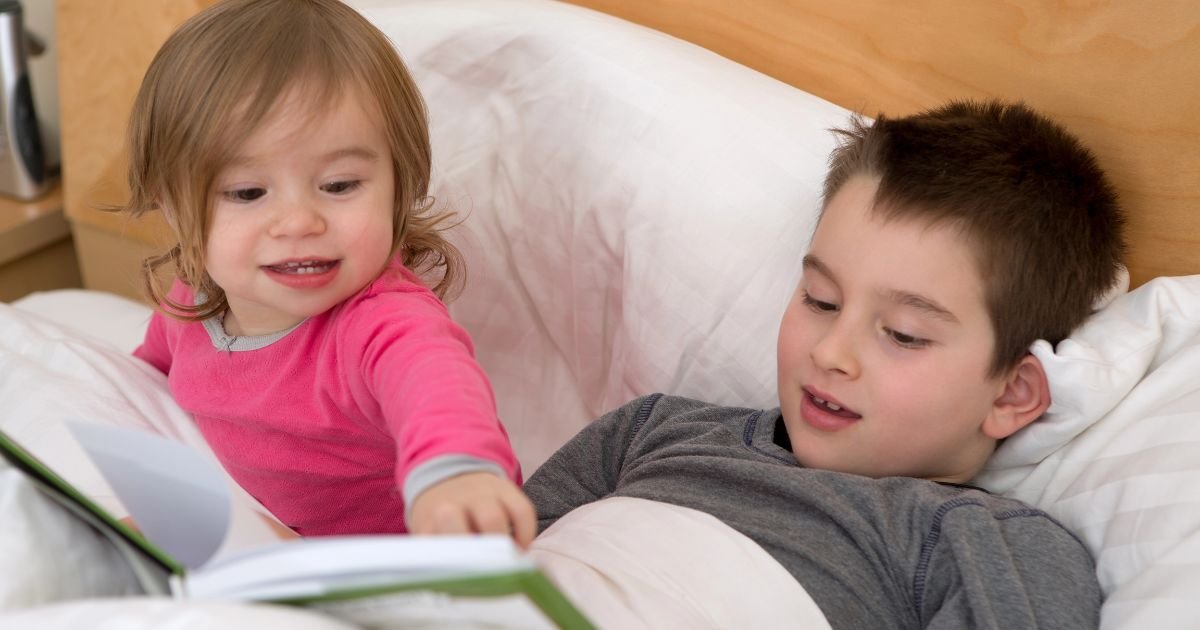
Reading books aloud and repeating back what your child says
Singing camp songs, folk songs, and modulating your voice (like the song “John Jacob Jingleheimer Schmidt”)
Every time you play with sound—loud, soft, matching, rhyming, silly, or just listening—you are building your child’s foundation for reading. Don’t rush to the letters. Let the ears lead.
How Do Sounds Feel?
The classic Montessori sandpaper letters are magical, but why? They make the connection between what your child hears and what your child feels. And as Maria Montessori would remind us, what we feel with our hands and our hearts is committed most vividly to memory.
When your child traces each sandpaper letter, a power signal is sent to their brain: this says /a/ and it feels like this.
And it doesn’t stop there! You can integrate all kinds of objects and movements:
Playing bring-me games: “Take the /t/ to something that starts with /t/!”
Scavenger hunts for objects with specific sounds
Moving the whole body to match sounds with things in your home (“Run and bring me the t-t-toothbrush!”)
Manipulating a movable alphabet (progression from the tactile sandpaper to holding and arranging letters)
Maria Montessori herself was constantly goofy with the kids, experimenting and playing, and knew that joyful, hands-on activities build true literacy. You can do the same at home!
Training the Eyes
The Montessori Sensorial curriculum is filled with visually engaging pink towers, blocks, color tablets, matching games, and lots of “I Spy” and “What’s Missing?” activities. Your child learns to notice small differences and patterns, skills that are absolutely critical for distinguishing between letters like b and d, or p and q.
And eventually, you get to four-part cards, matching words to pictures, and noticing that “cat,” “cot,” and “cut” look and sound different.
But you don’t start there. You build up to it, gently, in rhythm with your child’s development.
Reading Is Sensorial, Joyful, and Interdisciplinary
In Montessori, we teach reading sensorially: through sound, touch, and sight, all woven together in a playful, loving environment. But we don’t necessarily need an entirely separate “reading curriculum.”
Our Child of the Redwoods Curriculum is already fully scripted, step-by-step, and all the lessons across every subject area are designed to help your child build reading skills through real experiences and quality printable materials.
Our reading curriculum covers levels one through six, for ages two to nine, and follows your child’s developmental readiness, not an artificial grade or age.
And if you ever worry about “doing it wrong” or not being Montessori enough, I want you to know: “Parents know their kids best. You really do.” All you need is access to the method, and you can implement it with confidence.
Here’s Your Next Loving Step
Take the Reading Levels Quiz for clarity on your child’s current reading level and we’ll send you tips for helping you teach with Montessori.